How to Transform Your Treasures: Selling Antiques Online

Have you ever stumbled upon a hidden gem in your attic or basement? Perhaps a beautifully crafted pocket watch from your grandfather’s collection, or a delicate porcelain doll gathering dust in a forgotten corner. These pre-loved treasures, often referred to as antiques or vintage items, hold a unique charm and story waiting to be rediscovered. But what if you could give these forgotten pieces a new lease on life, while also earning some extra income? The answer lies in the ever-growing world of ecommerce for antiques.

Selling antiques online opens a treasure trove of opportunities. Gone are the days of relying on local antique stores or flea markets. By setting up an online antique store, you can connect with collectors and enthusiasts from all corners of the globe. Imagine – the ornately carved pocket watch you found tucked away could find a new home with a passionate collector across the ocean!

This guide provides a roadmap for anyone interested in venturing into the exciting world of online antique sales. Let us look into the essential steps involved, from understanding the value of your antiques to creating captivating online listings and employing effective marketing strategies. 

Unveiling the Value of Your Treasures Before Selling Antiques Online

Selling antiques online can be a thrilling adventure, filled with the potential to connect with passionate collectors and breathe new life into cherished pieces. But before you embark on this exciting journey, it’s crucial to know your antiques. Understanding the age, origin, material, and condition of your treasures is paramount to setting a fair price, attracting serious buyers, and ultimately, achieving success in the online marketplace.

In this section, we’ll equip you with the knowledge and tools to properly research and identify your antiques, maximizing your chances of a smooth and profitable online selling experience.
Selling Antiques Online

Importance of Research and Identification

The first step you need to take in selling antiques online involves uncovering the secrets your antiques hold – their age, origin, material, and condition. This information forms the foundation for accurate pricing and crafting compelling online listings that attract serious collectors.

Here’s why this detective work is essential:

  • Accurate Pricing: Knowing the age and material of your antique allows you to set a competitive and fair price. Underpricing valuable pieces means leaving money on the table, while overpricing can deter potential buyers.
  • Targeted Audience: Identifying the origin and style of your antique helps you cater your listing to specific collector groups. For example, a description highlighting the Art Deco design of a lamp will attract vintage décor enthusiasts.
  • Building Trust: Providing accurate information in your listings demonstrates your expertise and builds trust with potential buyers. This is especially important in the online world where buyers can’t physically inspect your treasures.

Tools of the Trade: Resources for Identifying Your Antiques

So, how do you unlock the secrets of your antiques? Here are some valuable tools to add to your detective kit:

  • The Power of the Internet: Utilize online resources like antique price guides, collector forums, and auction websites. Many websites allow you to search for similar items based on material, style, and age.
  • Appraisal Services: Consider professional appraisal services, especially for high-value antiques. A qualified appraiser can provide a detailed report outlining the authenticity, age, and estimated value of your piece.
  • Consult the Experts: Visit antique stores, flea markets, or museums and seek advice from experienced antique dealers or curators. Their knowledge and expertise can be invaluable in identifying your treasures.

Remember: When utilizing online resources or consulting experts, provide detailed information about your antique, including clear photos from multiple angles. The more details you share while selling antiques online,the more accurate the identification and valuation will be leading to increased sales.

Niche Down for Success: Catering to a Specific Collector Base

The world of antiques is vast, encompassing furniture, jewelry, pottery, artwork, and countless other categories. While it might be tempting to sell a wide variety of items, consider specializing in a particular niche while selling antiques online. Here’s why focusing your online store on a specific area can be advantageous:

  • Become an Authority: By specializing in a particular niche, you establish yourself as an expert in that category. This attracts collectors who are serious about acquiring specific types of antiques and value your knowledge.
  • Targeted Marketing: With a niche focus, you can tailor your marketing efforts to reach the right audience. This allows you to connect with relevant online communities, forums, and social media groups frequented by collectors in your niche.
  • Competitive Advantage: When you focus on a specific niche, you’ll gain a deeper understanding of the market trends, pricing strategies, and collector preferences within that category. This knowledge gives you a competitive edge when selling your antiques online.

Identifying Your Niche: Take time to explore your own interests and collections. What category of antiques sparks your passion? Perhaps you possess a wealth of knowledge about antique furniture restoration or have a keen eye for vintage jewelry design. Whatever your area of expertise, leveraging your passion and knowledge will make your online antique store stand out.

Remember: You don’t have to limit yourself to a single narrow category. You can start with a broader niche, such as “Art Deco furniture,” and gradually refine it as you gain experience and identify the most profitable subcategories within your chosen area.

By following these steps and harnessing the resources available, you can transform yourself from an owner of dusty treasures to a confident seller of valuable antiques in the exciting world of online commerce! In the next section, we’ll delve into the art of crafting captivating online listings that showcase your antiques’ true worth and entice potential buyers.

Mastering Online Presentation:

The world of online commerce thrives on visual appeal. When it comes to selling antiques online , captivating presentations are key to attracting serious collectors and fetching top dollar. This section dives into the art of showcasing your antiques online, focusing on high-quality photography and compelling product descriptions that tell a story.

High-Quality Photography: Capturing the Essence of Your Antiques

Imagine browsing an online store filled with blurry, poorly lit photos. Would you be enticed to learn more about the items? Probably not! High-quality photography is the cornerstone of successful online antique sales. Here’s how to ensure your photos capture the essence of your treasures:

  • Invest in Good Lighting: Natural daylight is ideal for showcasing the true colors and details of your antiques. If using artificial lighting, opt for diffused light sources to avoid harsh shadows.
  • Focus on Clarity: Ensure your photos are clear and crisp. Use a tripod for stability and adjust the camera settings to achieve sharp focus.
  • Multiple Angles are Key: Don’t settle for just one photo! Capture your antiques from various angles, showcasing the front, back, sides, and any unique details.
  • Highlight Flaws with Transparency: Be honest about the condition of your antiques. While excessive wear and tear might decrease value, collectors appreciate transparency. Capture close-up photos of any imperfections or damage.
  • Scale Matters: Provide a sense of scale by including a familiar object, like a ruler or coin, in some of your photos. This helps potential buyers visualize the size of the antique.

Beyond Basic Photos: Exploring Additional Options

While classic photos are essential, consider exploring additional options to further enhance your online presentation:

  • 360-Degree Views: This cutting-edge technology allows collectors to virtually rotate your antiques, providing a complete visual experience.
  • Lifestyle Shots: Showcase your antiques in a lifestyle setting. For example, photograph a vintage teacup set arranged for a tea party or a pocket watch nestled in a gentleman’s waistcoat. This adds context and evokes emotion, making the item more desirable.

Compelling Product Descriptions: Telling the Story Behind Your Antiques

A captivating product description goes beyond simply stating the size and material of your antique while selling antiques online. Think of it as storytelling. Weave a narrative that brings your antiques to life and resonates with collectors. Here’s how to craft compelling descriptions:

  • Highlight the History (if known): Does your antique have a documented history or provenance? Share this information in your descriptions! Knowing a piece belonged to a famous figure or originated from a specific historical period adds intrigue and value.
  • Focus on Unique Features: What makes your antique stand out from similar pieces? Draw attention to any special details, decorative elements, or maker’s marks.
  • Use Collector-Friendly Keywords: Research keywords relevant to your specific antique category. Include these keywords throughout your descriptions to ensure collectors searching for similar items can easily find yours.
  • Provide Accurate Details: Don’t underestimate the importance of basic information. Include accurate measurements (in inches and centimeters for global reach), details about the material, and a clear condition report.

By combining high-quality photography with compelling product descriptions, you transform your online antique store from a collection of objects into a treasure trove waiting to be discovered. Remember, you’re not just selling antiques; you’re selling stories, history, and a unique piece of the past. By mastering online presentation, you’ll attract the right buyers and unlock the true value of your treasures.

Choosing Your Online Marketplace: Finding the Perfect Home for Your Antiques

The world of online marketplaces is vast and diverse. Just like every antique has its unique story, the ideal platform for selling antiques online depends on several factors. This section delves into the different types of online marketplaces available, helping you choose the one that best suits your antiques and business goals of selling antiques online.

Matching Your Antiques with the Right Platform

Imagine showcasing your exquisite Victorian doll collection on a website primarily focused on auto parts. It wouldn’t be the most effective strategy, would it? The key to success lies in finding a platform frequented by the right audience for your specific antiques. Here are some of the most popular options to consider:

Established Marketplaces: 

  • eBay: This online giant is a household name and a popular choice for selling a wide variety of items, including antiques. eBay offers a massive audience of potential buyers and a well-established auction format. However, the competition can be fierce, and listing fees can add up.
  • Etsy: This platform caters more towards handmade and vintage goods, making it a great choice for unique and handcrafted antiques. Etsy fosters a community feel and allows for a more curated shopping experience.However, the audience reach might be slightly smaller compared to eBay.

Building Your Own Online Store: 

For a more personalized touch and complete control over your brand image, consider building your own online store.Platforms like Shopify and i.am.retailer offer user-friendly tools to create a professional and visually appealing website specifically for selling antiques online.

Here are some advantages of having your own online store:

  • Customization: Tailor the website design and functionality to perfectly showcase your unique collection.
  • Branding: Establish your own brand identity within the online antiques market.
  • Direct Customer Relationships: Build stronger relationships with your customers by fostering direct communication.

Specialized Auction Platforms: 

For high-value antiques, a specialized online auction platform might be the best option. These platforms cater specifically to collectors of rare and valuable items, often employing a team of experts to handle appraisals, marketing,and the auction process. While the fees associated with specialized auction platforms might be higher, they offer a targeted audience of serious collectors willing to pay top dollar for your treasures.

Building Your Own Auction Platform with i.am.retailer: 

While building your own online store is a fantastic option, what if you crave even more control and functionality? This is where i.am.retailer takes things a step further. This platform boasts unique customization capabilities, allowing you to integrate an ERP (Enterprise Resource Planning) system and various third-party software solutions. With i.am.retailer,you could potentially build a custom in-house auction platform tailored to your specific needs and antique niche.

Remember, choosing the right online marketplace is a crucial step in your journey as an online antique seller. By carefully considering the type of antiques you’re selling, your target audience, and your desired level of control, you can find the perfect platform to showcase your treasures and build a thriving online business.

Setting Competitive Yet Profitable Prices

Once you’ve chosen your online marketplace, the next crucial step in selling antiques online is determining the right price for your antiques. Here are some factors to consider:

  • Fair Market Value: Research similar items on various platforms to understand the current market value for your specific type of antique. Utilize online resources, auction records, and appraisal services (if necessary) to get a solid grasp of fair market value.
  • Restoration Costs: If your antiques require any restoration work before selling, factor in these costs when setting your price.
  • Listing Fees: Don’t forget to account for any listing fees associated with your chosen online marketplace.
  • Desired Profit Margin: Ultimately, you want to set a price that allows you to make a profit after considering all costs.

Finding the sweet spot between competitive and profitable pricing is key. By researching the market, factoring in costs,and considering your profit goals, you can set attractive prices that entice buyers without sacrificing your bottom line.

Building Trust and Customer Satisfaction: The Key to Success in Online Antique Sales

In the world of online commerce, trust is paramount. This is especially true when dealing with unique and often valuable items like antiques. Building strong relationships with potential buyers fosters customer satisfaction and keeps them coming back for more. This section explores how transparent communication, engaging with collectors, and a commitment to exceptional service can pave the way for selling antique online business.

Transparency: The Cornerstone of Trust

Imagine browsing an online store for a beautiful antique pocket watch. The description is vague, and the seller hasn’t responded to your questions about its functionality. Would you feel confident making a purchase? Probably not! Transparency is the cornerstone of building trust with potential buyers. Here’s how to ensure your communication and descriptions are crystal clear:

  • Accurate and Detailed Descriptions: Don’t underestimate the power of detailed product descriptions. Provide comprehensive information about the age, origin, material, and condition of your antiques. Highlight any unique features, maker’s marks, or historical significance. Be honest about any flaws or damage.
  • Prompt and Professional Communication: Respond to inquiries from potential buyers quickly and professionally. Address their questions thoroughly and provide any additional information they might need. This level of responsiveness demonstrates your commitment to customer service and builds trust.
  • Secure Payment Options and Clear Shipping Policies: Offer a variety of secure payment options to give your buyers peace of mind. Clearly outline your shipping policies, including costs, estimated delivery times, and packaging procedures. Transparency in these areas reassures buyers that their transactions will be handled securely and efficiently.

Fostering Connections with Collectors: Building a Loyal Customer Base

The online world offers a fantastic opportunity to connect with collectors who share your passion for antiques. By fostering connections and engaging with your audience, you can build a loyal customer base and create a thriving online community. Here are some ways to connect:

  • Utilize Social Media: Platforms like Instagram, Facebook, and Pinterest are powerful tools for showcasing your antiques and engaging with potential buyers. Share captivating photos, interesting historical tidbits, and behind-the-scenes glimpses of your business.
  • Expertise as a Selling Point: Don’t just sell antiques – share your knowledge! Offer insights into the history and value of different antique categories. Write blog posts, participate in online forums, and answer questions from collectors. By establishing your expertise, you position yourself as a trusted resource and build a loyal following.

The journey of selling antiques online can be an enriching and rewarding experience. By following the steps outlined in this guide, you can unlock the value hidden within your heirlooms and vintage treasures.

Here’s a quick recap:

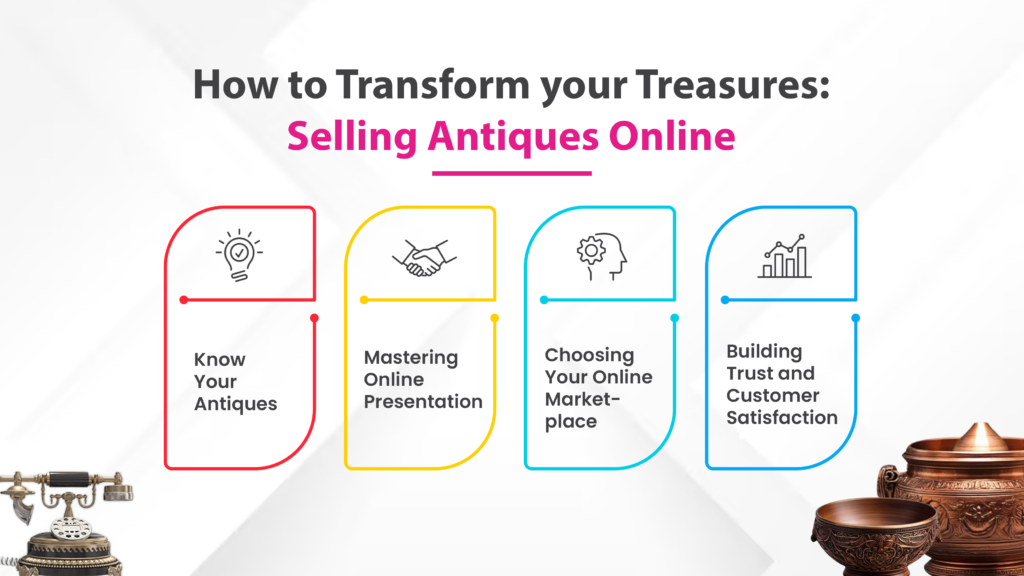
  • Know Your Antiques: Understanding the age, origin, material, and condition of your antiques is crucial for accurate pricing and creating compelling listings.
  • Master Online Presentation: High-quality photos and captivating product descriptions showcasing the unique features and stories behind your antiques are essential for attracting buyers.
  • Choose Your Online Marketplace: Select the platform that best suits your antiques, target audience, and desired level of control.
  • Set Competitive Yet Profitable Prices: Research the market, factor in costs, and set prices that entice buyers while ensuring a healthy profit margin.
  • Build Trust and Customer Satisfaction: By offering transparent communication, clear descriptions, and exceptional service, you build trust with potential buyers and foster a loyal customer base.

The world of online antiques is waiting to be explored. With knowledge, strategy, and a commitment to building trust,you can transform your collection of heirlooms into a thriving online business, sharing the beauty and history of your antiques with collectors worldwide. So, embark on this exciting adventure, unearth the hidden treasures within your attic, and let the world rediscover their timeless charm!

Your Step-by-Step Guide on how to start selling accessories online

The fashion industry is experiencing a major shift, with online sales surging year after year. At the forefront of this growth is the booming online accessory market. A recent study revealed that the global fashion accessories market is expected to reach a staggering USD 540.4 billion by 2025. This massive market presents a fantastic opportunity for anyone with an eye for style and a passion for entrepreneurship to start selling accessories online.

Why Should I Start Selling Accessories Online?

There are numerous advantages to starting an online accessory business. Here are just a few:

  • Low Overhead Costs: Compared to traditional brick-and-mortar stores, online businesses require significantly less upfront investment. You won’t need to worry about rent, utilities, or staff for a physical location.
  • Wider Customer Reach: The internet allows you to connect with a global audience, transcending geographical limitations. This opens doors to a much larger customer base than you could ever reach with a physical store.
  • Flexibility and Scalability: An online store offers the advantage of being open 24/7, allowing customers to browse and purchase at their convenience. This flexibility also makes it easier to scale your business as it grows, without the constraints of a physical space.
  • Data-Driven Marketing: The online world provides valuable data and insights into customer behavior. This allows you to tailor your marketing strategies for optimal results, maximizing your return on investment.
Step by Step Guide on How to start selling accessories online

Setting Up Your Shop

Selling accessories online can be a rewarding and profitable venture. However, to achieve success, it’s crucial to have a well-defined plan. 

Choosing a Platform:

The very first step to launching your online accessory store is selecting the platform that will house your virtual storefront. This decision is crucial, as it will significantly impact the functionality, growth potential, and overall user experience of your store. Let’s explore two main approaches:

Selling on Marketplaces (e.g., Etsy, Amazon):

Marketplaces are established online platforms that connect a vast pool of sellers with a massive audience of potential customers.

Pros:

  • Instant Access to Customers: Marketplaces already have a large established customer base, allowing you to tap into a ready-made audience right from the start. This can be particularly beneficial for new businesses, as it eliminates the need to build brand awareness from scratch.
  • Lower Initial Investment: Setting up a shop to sell accessories online on a marketplace typically requires a smaller upfront investment compared to building your own online store. This can be appealing for entrepreneurs with a limited budget.
  • Built-in Marketing and Traffic: Marketplaces often have built-in marketing features and generate substantial traffic, offering some level of marketing support for your products.

Cons:

  • High Competition: Marketplaces are filled with sellers, making it challenging to stand out from the crowd.
  • Limited Control over Branding: Your store on a marketplace will likely have a standardized layout and design, limiting your ability to fully customize the customer experience and reinforce your brand identity.
  • Marketplace Fees: Marketplaces typically charge sellers commission fees on each sale, which can eat into your profit margins.

Building Your Own Online Store

Building your own online store offers you greater control and flexibility over your business.

Pros:

  • Complete Brand Control: With your own online store, you have complete control over the design, layout, and branding of your storefront. This allows you to create a unique shopping experience that reflects your brand identity and resonates with your target audience.
  • Greater Customization: You have the freedom to customize various aspects of your store, such as product listings, checkout processes, and marketing campaigns. This allows you to tailor the shopping experience to your specific needs and target audience.
  • Scalability and Growth: As your business grows, your own online store can be easily scaled to accommodate an increasing number of products, customers, and transactions.
  • Data Ownership: When you own your online store, you have access to valuable customer data and analytics, allowing you to gain deeper insights into your customers’ preferences and buying habits. This data can then be used to inform your marketing strategies and optimize your offerings.

Cons:

  • Higher Initial Investment: Setting up and maintaining your own online store typically requires a larger initial investment compared to selling on a marketplace. This includes expenses for website development, hosting fees, marketing tools, and payment processing.
  • Building Brand Awareness: Without the built-in customer base of a marketplace, establishing brand awareness and attracting traffic to your store will require a dedicated marketing effort.
  • Technical Maintenance: Maintaining your own online store for selling accessories may involve some technical knowledge for tasks like managing plugins, updating software, and ensuring website security. However, many platforms like i.am.retailer offer user-friendly interfaces and robust support systems to minimize this challenge.

Curating Your Product Line:

The heart of any successful online accessory store lies in its captivating product line. Here are some key aspects to consider when curating your collection:

Selecting High-Quality, Unique Accessories:

Focus on offering well-made, attractive accessories that stand out from the competition. Prioritize quality materials, unique designs, and functionality. Source ethically produced products if that aligns with your brand values.

Identifying Your Target Audience and Catering Your Products to Their Tastes:

Understanding your ideal customer is essential. Conduct market research to understand their demographics, preferences, and buying habits. Leverage this information to curate a product line that caters to their specific tastes and needs.

Offering a Variety of Styles and Price Points:

Attract a wider customer base by offering a diverse range of styles, from bold and statement pieces to timeless classics. Cater to different budget levels by including a mix of price points. This allows customers with varying preferences and purchasing power to find something they love in your store.

By following these strategies and diligently choosing the right platform and crafting a captivating product line, you’ll be well on your way to launching a prosperous online accessory store.

You May Also Like

Creating Compelling Listings

Having established the foundation for selling accessories online with the right eCommerce platform selection and product curation, it’s time to focus on crafting compelling product listings. Remember, in the virtual world, your product listings are the digital salespeople that entice customers and convert them into loyal fans. Here’s how to create listings that showcase your accessories in their best light and drive sales

High-Quality Product Photography:

The old adage “a picture is worth a thousand words” rings especially true in the online world. High-quality product photography is the cornerstone of compelling listings. Without clear and enticing visuals, potential customers cannot truly appreciate the beauty and details of your accessories. Here are some key aspects to consider:

  • Showcase Every Detail: Utilize multiple high-resolution product photos from various angles. Capture close-ups to showcase intricate details like textures, craftsmanship, and any unique design elements. Remember, potential customers cannot physically examine your products, so detailed photos are crucial for building trust and confidence in their purchase decisions.
  • Embrace Natural Light: Natural light creates a more natural and inviting look for your products. If possible, utilize natural light settings when photographing your accessories. However, if relying on studio lighting, aim for a soft and diffused light that avoids harsh shadows or unnatural color casts.
  • Maintain a Consistent Background: Using a clean and consistent background for all your product photos creates a professional and cohesive visual experience for customers browsing your store. White or light-colored backgrounds are popular choices as they allow the products to stand out.

Beyond the Product: While detailed product shots are essential, consider incorporating lifestyle photos into your listings as well. These photos showcase how your accessories can be worn or used in real-life settings. Lifestyle photos help customers visualize how the products will fit into their own personal style and everyday lives.

Enticing Product Descriptions

Compelling product descriptions are equally important as high-quality photos. These descriptions serve as an informative and persuasive text that complements the visuals and entices customers to learn more and ultimately purchase your accessories. Here are key elements to include:

  • Clear and Concise Language: Write descriptions that are easy to understand for a broad audience. Avoid using overly technical jargon or complex sentences. Focus on using clear and concise language that highlights the key features and benefits of each accessory.
  • Keyword Optimization: Integrate relevant keywords throughout your product descriptions, without sacrificing readability. This helps your products rank higher in search engine results, increasing the chances of potential customers finding your store.
  • Features vs. Benefits: Don’t just list features; explain the benefits. While listing product features like material composition or dimensions is important, focus on highlighting the benefits those features offer to the customer. For example, instead of simply stating “made from AD Stones,” explain how the genuine AD Stones translates into a durable and luxurious product.
  • Addressing Sizing and Care: If your accessories involve sizing or require specific care instructions, be sure to include this information in your product descriptions. For example, clearly state necklace length or bracelet circumference. Include washing instructions or recommendations for storing delicate items. Providing this information demonstrates attention to detail and builds customer trust.

By following these tips for product photography and descriptions, you can create compelling listings that showcase the beauty and value of your accessories, ultimately driving sales and building a thriving online business of selling accessories online. The next section will delve into the crucial world of marketing your online store to reach your target audience and generate brand awareness.

Marketing and Promotion

Having established a captivating product line and crafted compelling listings, the next crucial step is attracting customers to your online store. In the competitive world of online commerce, effective marketing strategies are essential for building brand awareness, reaching your target audience, and driving sales when selling accessories online.

Harnessing the Power of Social Media:

Social media platforms offer an incredible opportunity to connect with your target audience in an interactive and engaging way. Here’s how to leverage the power of social media to promote your online accessory store:

  • Captivating Content is King: Visual platforms like Instagram and Pinterest thrive on visually appealing content. Create high-quality photos and videos showcasing your accessories in action. Utilize lifestyle photos to demonstrate how your products can be worn or used in real-life settings. Incorporate short video clips showcasing the craftsmanship or unique features of your accessories.
  • Building a Community: Social media is about more than just broadcasting; it’s about fostering interaction and building a community around your brand. Engage with your followers by responding to comments and questions in a timely and friendly manner. Run interactive polls or contests to generate excitement and encourage participation.
  • Influencer Marketing: Partnering with relevant influencers can be a powerful way to reach a wider audience and build brand credibility. Identify influencers whose style and audience align with your target market. Collaborate on sponsored posts or product reviews to leverage their established following and introduce your accessories to a new customer base. Remember, authenticity is key. Partner with influencers who genuinely love your products and whose endorsement feels natural.
  • Targeted Social Media Ads: Most social media platforms offer paid advertising options that allow you to target your ideal customers with laser precision. Utilize demographic targeting to reach users based on age, location, interests, and online behavior. This allows you to maximize your advertising budget by reaching the most likely customers for your unique accessories.

The Art of SEO (Search Engine Optimization)

In the digital world, getting found by potential customers is crucial. Search Engine Optimization (SEO) is the art of optimizing your website and content to rank higher in search engine results pages (SERPs) for relevant keywords.

  • Keyword Research: Identify relevant keywords that potential customers might use to search for products like yours. Utilize keyword research tools to understand search volume and competition for different keywords. Integrate these keywords naturally throughout your website content, product titles, and descriptions.
  • Building Backlinks: Backlinks are essentially links to your website from other reputable websites. Having high-quality backlinks from relevant websites signals to search engines that your site is trustworthy and authoritative. There are various ways to build backlinks, such as guest blogging on relevant industry websites or directories. However, focus on creating high-quality content on selling accessories online that others will naturally want to link to.

Promotions and Discounts

Strategic promotions and discounts can be an effective way to attract new customers, generate excitement, and boost sales while selling accessories online. Here are some strategies to consider:

  • Introductory Offers: Offer exclusive discounts or welcome coupons to entice first-time buyers to explore your store.
  • Seasonal Sales and Flash Deals: Create a sense of urgency and excitement by running seasonal sales or limited-time flash deals. Promote these offers across your social media platforms and website banners to generate buzz.
  • Loyalty Programs: Reward your loyal customers with exclusive deals, birthday discounts, or early access to new product launches. This incentivizes repeat business and fosters customer loyalty.

Providing Exceptional Customer Service

In the online world, building trust and loyalty hinges on exceptional customer service. Here’s how to prioritize customer satisfaction and create a positive brand experience:

  • Prompt and Professional Communication: Respond to customer inquiries and concerns as promptly as possible. Aim to address all messages within 24 hours or less. Be professional and courteous in your communications, even when dealing with frustrated customers.
  • Clear Policies: Clearly outline your return and exchange policies on your website. Make the return process hassle-free and straightforward. By offering a generous return policy, you demonstrate confidence in your products and build customer trust.
  • Going the Extra Mile: Occasionally go the extra mile to surprise and delight your customers. Include a handwritten thank-you note with orders or offer free shipping on special occasions. These small gestures can create a lasting positive impression and encourage repeat business.

The world of online accessories is brimming with potential, offering a captivating avenue for anyone with a passion for fashion and a keen entrepreneurial spirit. This comprehensive guide has equipped you with the essential knowledge and actionable steps to launch and thrive in this dynamic market of selling accessories online.

Key Steps to Online Accessory Success

  1. Find Your Niche: Identify a unique space within the vast accessory landscape that aligns with your interests and caters to a specific customer base.
  2. Source High-Quality Products: Partner with reliable suppliers who offer well-made and attractive accessories, ensuring customer satisfaction and building trust in your brand.
  3. Choose Your Platform: Select the platform that best suits your needs, whether leveraging the established audience of online marketplaces or building your own fully customizable online store.
  4. Craft Compelling Listings: Utilize high-resolution product photography showcasing details and lifestyle settings, alongside clear and concise descriptions that highlight features, benefits, and sizing information.
  5. Embrace the Power of Marketing: Harness the potential of social media platforms like Instagram, Pinterest, and TikTok to connect with your audience, run targeted ads, and collaborate with relevant influencers. Additionally, leverage SEO best practices to enhance your website’s search engine ranking and organic reach.
  6. Offer Promotions and Discounts: Strategic promotions and discounts can attract new customers, generate excitement, and boost sales. Consider introductory offers, seasonal sales, or loyalty programs while selling accessories online.
  7. Prioritize Customer Service: Build trust and loyalty by providing exceptional customer service. Respond promptly to inquiries, offer clear return and exchange policies, and strive to consistently exceed customer expectations.

Your success starts with a click

Create your account and start selling in minutes.

Benefits of Starting Your Online Store with i.am.retailer

While online marketplaces offer a quick start, building your own online store with i.am.retailer unlocks a multitude of benefits:

  • Complete Brand Control: Craft a unique and immersive shopping experience that reflects your brand identity from the very first click.
  • Enhanced Customization: Tailor every aspect of your store, from product listings and checkout processes to marketing campaigns, to perfectly align with your vision.
  • Scalability for Growth: As your online accessory business flourishes, your i.am.retailer store seamlessly scales to accommodate increasing product offerings, customer traffic, and sales volume.
  • Data Ownership: Gain valuable customer data and insights that empower you to make informed decisions regarding marketing strategies, product development, and overall business optimization.

The online accessory market awaits! This guide has equipped you with the knowledge and tools you need to navigate the exciting world of e-commerce and establish a thriving store for selling accessories online. Don’t let your entrepreneurial spirit wane any longer. Take action today!

i.am.retailer offers a user-friendly platform with all the features you need to launch and manage your online store effortlessly. From creating stunning product listings to implementing effective marketing strategies, i.am.retailer empowers you to take control and build a successful online brand. With i.am.retailer, selling accessories online business is just a click away!

Ship Smarter, Save More: Cost-Effective Order Fulfillment for Small Businesses

Running a small or medium-sized business (SME) is a dream for many, but keeping costs under control can feel like a constant battle. One area that can quickly eat away at your profits is order fulfillment, which is the process of getting your products from your stockroom to your customer’s doorstep. Packing boxes, printing labels, and arranging shipping can add up quickly, especially as your business grows.

That’s why having a smart plan for order fulfillment is crucial. By finding ways to streamline this process and cut unnecessary costs, you can free up valuable resources to focus on what you do best: creating amazing products and keeping your customers happy. From inventory management to shipping logistics, the expenses can quickly add up and impact profitability.

In this blog, we’ll delve into the key challenges SMEs face with order fulfillment costs and discuss the importance of implementing a cost-effective fulfillment strategy to overcome these hurdles. By optimizing your fulfillment process, you can streamline operations, reduce expenses, and enhance customer satisfaction, ultimately driving growth and success for your business. Join us as we explore practical tips and strategies to help SMEs navigate the complexities of order fulfillment in a cost-efficient manner.

Optimizing In-House Order Fulfillment

Fulfilling orders may seem like a straightforward process, but for SMEs, it can quickly become a cost conundrum.  The key lies in striking a balance between efficiency and affordability. Here are a few key strategies to optimize your order fulfillment process for cost-effectiveness:

Cost-Effective Ways to Fulfill Online Orders for SMEs - Optimizing In house fulfillment

Warehouse on Point

Your warehouse is the heart of your order fulfillment operation. Utilize space efficiently by strategically organizing your products. Shelving solutions that maximize vertical space and clear labeling systems can significantly reduce picking times and ensure accuracy.

Furthermore, implement a picking and packing system that minimizes unnecessary movement within the warehouse. This could involve designated picking zones or batch picking techniques to streamline order processing and reduce labor costs.

Packing Like a Pro: The Right Box for the Right Job

It might seem like a small detail, but choosing the right size and type of packaging can have a major impact on your bottom line. Oversized boxes not only waste valuable storage space but also lead to higher shipping costs.

Invest in a variety of box sizes to ensure you’re using the most appropriate option for each order. Additionally, consider eco-friendly packaging options such as recycled cardboard or biodegradable materials.

While these might have a slightly higher upfront cost, they can potentially attract environmentally conscious customers and contribute to a positive brand image.

Choosing the Right Shipping Partner

Shipping costs can quickly eat into your profit margins. Don’t settle for the first carrier you come across. Take some time to compare rates and services offered by different shipping companies.

Consider factors like delivery speed, reliability, and tracking options. Once you’ve identified a few potential partners, negotiate discounted rates based on your expected order volume.

Many carriers offer special programs for small businesses, so don’t be afraid to leverage your buying power. By implementing these strategies, you can transform your order fulfillment process into a cost-effective engine that propels your business forward.

You May Also Like

Exploring Alternative Fulfillment Solutions

Not every SME has the resources to maintain a fully stocked warehouse. Fortunately, there are alternative fulfillment models that can help you meet customer needs without breaking the bank. Let’s explore two popular options:

Dropshipping

Dropshipping allows you to offer a wider product selection without carrying any inventory yourself. Here’s how it works: when a customer places an order on your website, you forward the order details and shipping information to a third-party supplier (dropshipper). The dropshipper then stores, packages, and ships the product directly to your customer.

The benefits are clear: reduced overhead costs since you don’t need to invest in inventory or warehouse space, and the ability to offer a wider product variety without upfront investment. However, dropshipping also has drawbacks.

You relinquish some control over inventory levels and fulfillment timelines. Additionally, it can be challenging to ensure a consistent brand experience, as the packaging and customer service might be handled by the dropshipper.

Third-Party Logistics (3PL): Outsourcing Efficiency

For businesses with fluctuating order volume or limited storage space, 3PL warehouses offer a compelling solution. 3PL providers handle all aspects of order fulfillment, from storing your inventory to picking, packing, and shipping orders to your customers. 

This frees you up to focus on core business activities like marketing and sales. The cost benefits of 3PLs are significant, especially for SMEs. They offer economies of scale, meaning you can benefit from their discounted shipping rates and efficient warehouse operations. 

Additionally, you only pay for the storage space you actually use, making it a scalable solution that adapts to your business growth. While there are associated costs with using a 3PL, they can be offset by the efficiencies gained and the ability to focus on core business activities.

Ultimately, the best fulfillment option for your SME depends on your specific needs and resources. Carefully consider factors like order volume, product type, and budget to determine the approach that best positions you for success.

Embracing the efficiency of technology

In today’s fast-paced ecommerce landscape, manual processes can quickly become bottlenecks, hindering your order fulfillment efficiency. Here’s where technology steps in as your secret weapon. By leveraging the right tools, you can streamline operations, minimize errors, and ultimately save time and money.

Inventory Under Control: The Power of Inventory Management Software

Ever had a customer order a product that’s actually out of stock? Frustrating for both you and the customer. Inventory management software eliminates this headache. These user-friendly platforms allow you to track stock levels in real-time, providing instant insights into available inventory. This empowers you to set reorder points to ensure you never run out of popular items. 

Accurate inventory control also helps you avoid overselling, a costly mistake that can lead to order cancellations and unhappy customers. By preventing these issues, inventory management software translates into significant cost savings and a smoother overall fulfillment experience.

Automation: The Efficiency Engine

Imagine generating shipping labels, calculating rates for different carriers, and scheduling pickups – all with just a few clicks. Shipping automation tools make this dream a reality. These powerful tools integrate seamlessly with your online store and streamline the entire shipping process. No more manual data entry or time-consuming calculations. 

Automation ensures accuracy while saving you valuable time and resources. This allows you to focus on higher-level tasks like growing your business and providing exceptional customer service. Furthermore, by automating repetitive tasks, you significantly reduce the risk of human error, ensuring your orders are shipped to the correct address and arrive on time. 

In the world of ecommerce, efficiency is key, and shipping automation tools are a powerful force for streamlining your order fulfillment process and boosting customer satisfaction.

Throughout this blog, we’ve explored a range of strategies for optimizing your order fulfillment process for cost-effectiveness. Here’s a quick recap:

  • Warehouse efficiency: Utilize smart storage solutions, implement picking and packing systems, and consider eco-friendly packaging options.
  • Strategic partnerships: Negotiate discounted rates with shipping carriers and explore the potential benefits of dropshipping or 3PL warehousing depending on your business needs.
  • Technology as your ally: Leverage inventory management software to maintain accurate stock levels and avoid overselling. Embrace shipping automation tools to streamline processes and minimize errors.

Your success starts with a click

Create your account and start selling in minutes.

By implementing these strategies, you can transform your order fulfillment operation from a cost burden into a competitive advantage. The best fulfillment approach for your SME depends on your unique circumstances. Carefully assess your business needs, such as order volume, product type, and budget, to determine the most suitable strategy.

Ready to unlock the power of cost-effective order fulfillment? Look no further than iamretailer! Our user-friendly ecommerce platform equips you with all the tools you need to streamline fulfillment, manage inventory efficiently, and automate shipping processes. 

Sign up for your free trial today and experience the difference iamretailer can make in your business. Focus on what you do best – selling amazing products – and let iamretailer handle the fulfillment magic behind the scenes!

Why Return and Refund Policy is Essential to Gain Customer’s Trust

Imagine you’ve found the perfect shirt online – stylish, comfortable, and exactly what you’ve been searching for. You add it to your cart, eager to complete your purchase. But then, you hesitate. A nagging question pops into your head: “What if it doesn’t fit? Can I return it?” You browse the website, searching for a return and refund policy, but it’s nowhere to be found. Uncertainty creeps in, and with a heavy heart, you abandon your virtual shopping cart.

This scenario happens more often than you might think. In the world of ecommerce, where customers can’t physically touch or try on products before buying, a clear and transparent return policy is more than just an afterthought – it’s a cornerstone of building trust. Statistics show that a generous return and refund policy can significantly increase conversion rates, the percentage of visitors who make a purchase on your website. By addressing customer concerns about fit, quality, and overall satisfaction, a well-defined return policy can turn hesitant browsers into loyal customers.

The Trust Factor: How Return and Refund Policy Builds Customer Loyalty

In the fast-paced world of ecommerce, where trust is hard-earned and easily broken, a well-crafted return and refund policy can be a powerful tool for building lasting customer relationships. Here’s how a customer-centric return policy can transform hesitant shoppers into loyal brand advocates:

Reduces Purchase Hesitation

Imagine browsing an online store for a new pair of shoes. You find the perfect style, but a nagging question lingers: “What if they don’t fit?” A clear and transparent return policy acts as an anxiety antidote. By outlining the process for returning items that don’t meet expectations, it removes hesitation and encourages customers to buy with confidence.

They know they have a safety net – if the shoes pinch or the color clashes, they can easily return them. Studies show that 73% of customers say a generous return policy makes them more likely to buy from a store. By eliminating this friction point in the buying journey, you can significantly increase conversion rates and boost your bottom line.

Building Bridges of Trust: Transparency and Customer Focus

A well-defined return policy goes beyond simply outlining the mechanics of returns. It’s a statement about your brand values. By prioritizing customer satisfaction and willingness to stand behind your products, you demonstrate transparency and build trust. This fosters a sense of fairness and conveys that you value your customers’ experience.

Think of it as a handshake – a commitment to ensuring their satisfaction throughout the shopping journey. This builds brand loyalty, encouraging customers to return for future purchases and recommend your store to their network.

Happy Returns, Happy Customers: Enhancing the Customer Experience

A smooth and hassle-free return process leaves a positive impression on customers, even if they ultimately decide to return an item. Imagine a scenario where a customer receives a damaged product. Your return policy clearly outlines the steps for a quick and easy refund. The customer is impressed with the efficiency and feels their concerns are valued.

This positive experience fosters customer loyalty and increases the likelihood of them returning for future purchases. Loyal customers are not only more likely to repurchase, but they are also more likely to recommend your brand to others, propelling your business forward through positive word-of-mouth marketing.

In today’s competitive online landscape, where customer experience reigns supreme, a stellar return and refund policy can be a powerful differentiator. By prioritizing customer satisfaction throughout the buying journey, you build trust, loyalty, and ultimately, a thriving ecommerce business.

Beyond Customer Satisfaction: The Business Benefits of a Return Policy

While a customer-centric return and refund policy builds trust and loyalty, the benefits extend far beyond happy customers. Here’s how a well-designed policy can translate into tangible business advantages:

Boosting Your Bottom Line: Increased Sales and Conversions

Think of your return policy as a silent salesperson, working tirelessly behind the scenes to increase sales. Studies indicate that 67% of abandoned carts are due to concerns about returns. By offering a clear and transparent policy, you address these concerns upfront, removing a major barrier to purchase.

Customers feel confident knowing they can return an item if it doesn’t meet their expectations. This reduces cart abandonment and encourages them to complete their purchases, leading to a direct increase in sales and conversion rates.

A Goldmine of Information: Valuable Customer Feedback

Returns aren’t just about processing exchanges or issuing refunds; they can also be a treasure trove of valuable customer insights. Analyzing return data can reveal trends in product sizing, functionality, or overall customer satisfaction.

For instance, a high return rate for a specific clothing item might indicate a sizing issue or a need for clearer product descriptions. By leveraging this feedback, you can continuously improve your product offerings and address any underlying customer concerns. This not only reduces future returns but also demonstrates your commitment to product quality and customer satisfaction, further strengthening your brand image.

Standing Out from the Crowd: Competitive Advantage

In the fiercely competitive world of ecommerce, a customer-friendly return policy can be a powerful differentiator. While some competitors might have stricter policies or hidden fees, yours can stand out as a beacon of transparency and flexibility.

This attracts customers who value a hassle-free shopping experience and the ability to return items without worry. By prioritizing customer satisfaction throughout the buying journey, you not only retain existing customers but also attract new ones seeking a more convenient and risk-free shopping experience. This translates into a significant competitive advantage, propelling your business forward in the ever-evolving ecommerce landscape.

You May Also Like

Building Trust with Clarity: Crafting a Winning Return and Refund Policy

So, you’ve seen how a well-crafted return and refund policy can build trust, boost sales, and give your business a competitive edge. Now, let’s dive into the practical steps of creating your own winning policy. The foundation of a strong policy lies in its clarity: customers need to understand exactly what to expect if they need to return or request a refund.

Why Return and Refund Policy is Essential to Gain Customer's Trust

Speak Their Language: Clear and Easy-to-Understand Communication

Here’s the golden rule: keep it simple! Avoid legalese and complex jargon that might leave your customers scratching their heads. Instead, use concise and straightforward language that’s easy for anyone to understand. Clearly outline the eligibility criteria for returns and refunds.

This includes specifying what types of products can be returned, for what reasons, and within what timeframe. Don’t forget to detail the return process itself – how customers should initiate a return, what information they’ll need to provide, and where to send the product.

By providing a clear roadmap for returns, you eliminate confusion and ensure a smooth experience for both you and your customer. Remember, a well-informed customer is a confident customer, more likely to complete their purchase knowing they have a transparent return policy as a safety net.

Finding the Sweet Spot: Reasonable Return Windows

How long should customers have to return an item? This seemingly simple question requires careful consideration. While you want to offer enough time for customers to receive, try on, and potentially reconsider their purchase, excessively long windows can create logistical challenges and inventory management issues. The key is to find a balance that satisfies both customer expectations and your business needs.

Industry standards can be a helpful starting point. For instance, many apparel stores offer return windows between 30-60 days, while electronics stores might have slightly shorter windows due to faster product depreciation. Ultimately, consider what your target audience expects. Customer satisfaction is paramount, so aim for a window that allows them ample time to assess their purchase. Remember, happy customers are more likely to return for future purchases, and a reasonable return window demonstrates your commitment to their satisfaction.

Setting Clear Expectations: Defining Acceptable Return Conditions

Not all returns are created equal. A sweater with a tag still on can be easily restocked, while a used pair of shoes presents a different scenario. Clearly outline what constitutes an acceptable return in your policy. This typically includes items that are unworn, unwashed, and have their original tags attached.

You can also specify any limitations on returns, such as for final sale items or products that have been used or damaged. Being transparent about acceptable return conditions upfront helps manage customer expectations and prevents misunderstandings down the line. Consider offering clear visuals or a glossary of terms to avoid any confusion regarding acceptable return conditions.

By establishing a fair return window and outlining clear return criteria, you create a policy that fosters trust and protects your business interests. This balance between customer satisfaction and practicality is key to crafting a winning return and refund policy.

Multiple Avenues for Returns: Convenience is King

Returning an item shouldn’t feel like an obstacle course. Offer multiple return options to cater to your customers’ preferences and make the process as easy as possible. This might include in-store returns for customers who prefer a face-to-face interaction.

For online-only businesses, providing pre-paid return shipping labels or return barcodes can significantly reduce the hassle factor for mail-in returns. 82% of shoppers say they’re more likely to shop at a store with easy return options, highlighting the importance of convenience in this aspect of the customer journey.

By catering to different preferences, you ensure a smooth return experience that fosters customer satisfaction and encourages repeat business.

Refunds with Speed: Maintaining Trust Through Efficiency

The return process doesn’t end with the customer sending the item back. Clearly outline the refund timeline in your policy. This includes how long it will take to process the return and issue a refund once the item is received. Customers appreciate transparency, so be upfront about expected processing times. When it comes to the actual refund, avoid lengthy delays. Strive to issue refunds promptly, ideally back to the original payment method. This demonstrates your commitment to customer satisfaction and helps maintain trust in your brand. In some cases, you might also consider offering store credit as an alternative, but ensure this aligns with your customer preferences and is clearly communicated within the policy.

By providing multiple return options and prioritizing a quick and efficient refund process, you can transform a potentially negative experience (a return) into a positive touchpoint that strengthens customer relationships and builds brand loyalty.

Your success starts with a click

Create your account and start selling in minutes.

In the competitive world of ecommerce, building trust and customer satisfaction is paramount. A well-crafted return and refund policy acts as a cornerstone of this strategy. By clearly outlining your return process and demonstrating a commitment to customer satisfaction, you can:

Reduce purchase anxiety, encouraging customers to buy with confidence knowing they can return items that don’t meet their expectations. Studies show that 67% of abandoned carts are due to return concerns!
Boost sales and conversion rates by eliminating a major barrier to purchase.
Gain valuable customer feedback through return data, allowing you to improve your products and overall customer experience.

Creating an effective return and refund policy doesn’t have to be overwhelming. Numerous online resources and tools are available to help you craft a policy that aligns with your business needs and industry best practices.i.am.retailer ecommerce platform empowers you with the tools you need to succeed, including:

  • Sizing recommendations to help customers choose the perfect fit, reducing unnecessary returns.
  • A customizable return policy template that allows you to easily set clear and transparent return conditions.
  • Page optimization tools to create a user-friendly shopping experience that builds trust.

 With iamretailer, you can build trust, boost sales, and turn happy customers into loyal brand advocates.

How to Price Your Product? A Strategic Guide for Entrepreneurs

In the evolving ecommerce industry many still has this age-old question: how much should I charge for my amazing new product? You’ve poured your heart and soul into creation, design, and sourcing – now you’re faced with the critical task of pricing your product. So, how to price your product? This seemingly simple question can leave even seasoned ecommerce entrepreneurs scratching their heads. After all,if you get it wrong, you might be digging a hole for your business instead of striking gold.

Strategic product pricing is the secret weapon in your ecommerce journey. Just like a captivating product description can turn window-shoppers into buyers, the right price can attract customers, maximize your profit margin, and propel your business forward. In the fiercely competitive world of online sales, strategic pricing is the difference between blending into the background and becoming a shining star.

This comprehensive guide will equip you with the knowledge and tools to navigate the world of ecommerce pricing strategies. We’ll explore various pricing models, from the tried-and-true cost-based pricing to the customer-centric value-based pricing. We’ll also delve into the art of competitive pricing, helping you position your products strategically in the marketplace. By the end of this blog post, you’ll be confident in your ability to price your products for profitability and success. Let’s understand the pricing strategy that will take your business to the top!

Strategies To Price Your Products

You’ve developed a fantastic new product and are ready to launch it into the exciting world of ecommerce. But before you hit that “publish” button, there’s one crucial step remaining: determining the perfect price. This can feel like a daunting task, but fear not! There are various pricing strategies to guide you on your journey.

In this blog post, we’ll delve into the intricacies of these strategies, helping you choose the one that best suits your new product and business goals. First up, we’ll explore the tried-and-true method of cost-based pricing.

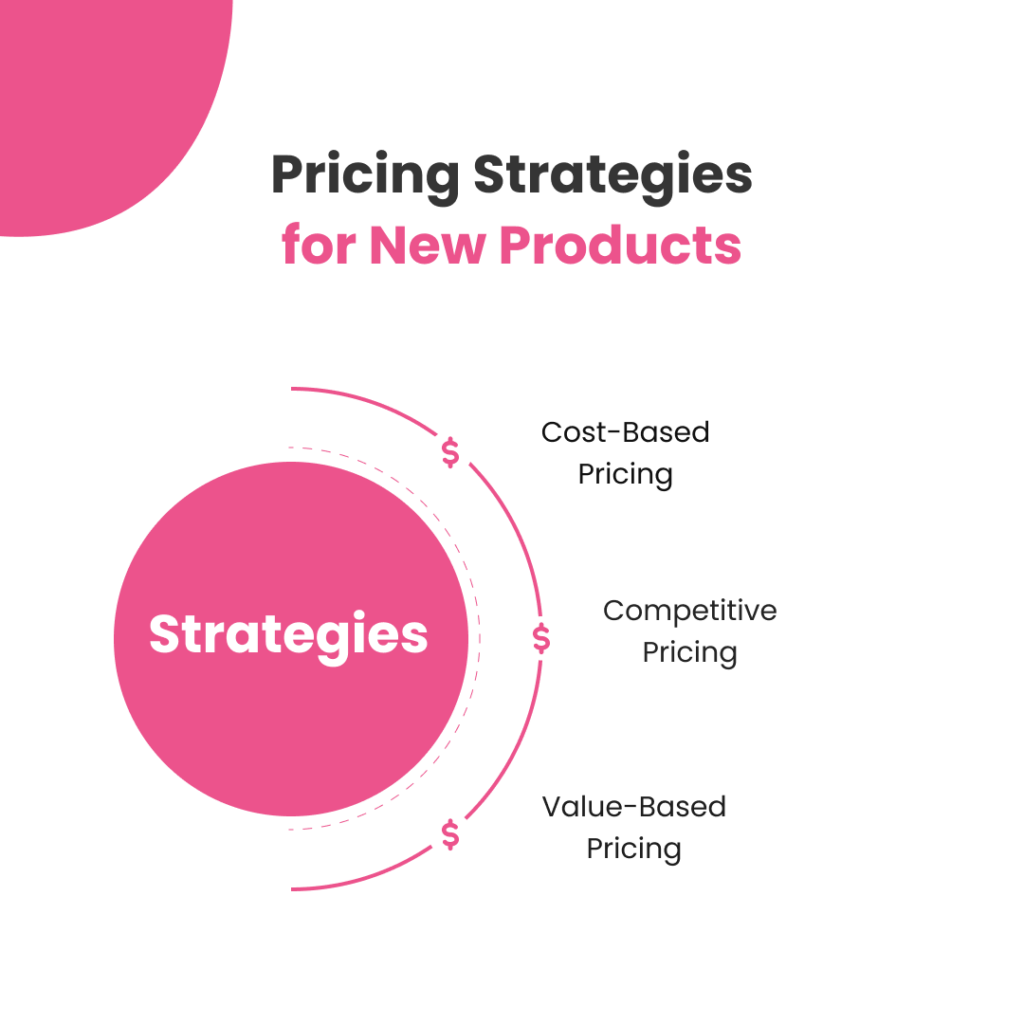
Pricing Strategies for new products

Cost-Based Pricing: A Foundation for Success

Cost-based pricing is a straightforward approach that establishes a base price by calculating all the expenses associated with bringing your product to market. This includes the cost of raw materials, manufacturing, packaging, shipping, and any overhead expenses like rent or employee salaries. By adding a markup percentage to this total cost, you arrive at a selling price that ensures you cover your basic costs and generate a desired profit margin.

Advantages of Cost-Based Pricing:

  • Simplicity: This method is easy to understand and implement, making it a popular choice for new businesses.
  • Guaranteed Coverage: By factoring in all your costs, you’re assured of not selling your product at a loss.

Disadvantages of Cost-Based Pricing:

  • Market Blindness: This approach doesn’t take into account what your target audience is willing to pay or how your product is priced compared to competitors.
  • Limited Profit Potential: Focusing solely on costs might lead to a price that’s uncompetitive or fails to maximize your profit potential.

While cost-based pricing offers a solid foundation, it’s just one piece of the puzzle. In the coming sections, we’ll explore other strategies like competitive pricing and value-based pricing, helping you develop a pricing strategy that’s not just cost-conscious, but also market-savvy and customer-centric.

Competitive Pricing: Keeping Up with the Pack

Imagine entering a bustling marketplace filled with similar products. How do you ensure yours stands out? Competitive pricing analyzes the prices of similar products offered by your rivals. By understanding their pricing strategies, you can position your product competitively in the market. This might involve setting a slightly lower price to attract customers or offering a similar price point if your product boasts superior quality or additional features.

Advantages of Competitive Pricing:

  • Market Relevance: This approach ensures you’re in line with current market trends and customer expectations. Customers can easily compare prices online, and a competitive price tag makes your product a viable option.
  • Reduced Risk: By following established pricing structures, you minimize the risk of setting a price that’s too high and scaring away customers.

Disadvantages of Competitive Pricing:

  • Price Wars: Focusing solely on matching competitors can lead to price wars, where everyone keeps lowering prices to outdo each other. This can ultimately hurt profit margins for all businesses involved.
  • Value Neglect: Constantly chasing the competition might cause you to neglect your product’s unique value proposition. Remember, your product has its own strengths and benefits that justify a certain price point.
    Competitive pricing is a valuable tool, but it shouldn’t be the sole factor driving your pricing strategy.

In the next section, we’ll delve into value-based pricing, a strategy that focuses on the perceived value your product offers to the customer.

You May Also Like

Value-Based Pricing: Putting the Customer First

Imagine a customer looking for a specific product. They’re not just interested in the price tag; they’re looking for a solution to their problem or a way to improve their lives. Value-based pricing focuses on the perceived value your product offers to the customer and sets the price based on that value. This approach goes beyond production costs and competitor analysis; it delves into the heart of customer perception and willingness to pay.

Advantages of Value-Based Pricing:

  • Profit Potential: By focusing on the value you deliver, you can potentially command a higher price point than what competitors might offer for similar products. This translates to increased profit margins.
  • Customer Focus: This strategy prioritizes the customer, ensuring they feel the price reflects the positive impact your product has on their lives.


Disadvantages of Value-Based Pricing:

  • Market Research: Successfully implementing value-based pricing requires a deep understanding of your target audience and their perception of your product’s value. This might involve market research, surveys, or customer feedback analysis.
  • Subjectivity: Perceived value can be subjective, and accurately gauging customer willingness to pay can be challenging.


Value-based pricing offers a customer-centric approach that can unlock higher profits. However, it requires careful research and understanding of your target market. In the next section, we’ll explore how to combine these strategies to craft a winning pricing strategy for your ecommerce business.

Key Considerations When Setting Your Price

Having explored various pricing strategies, you might be wondering: how do I choose the right one for my product? The truth is, there’s no one-size-fits-all answer. The ideal pricing strategy often involves a blend of these approaches, taking into account several key factors specific to your business and product.

Target Market and Customer Value Perception

First and foremost, understand your ideal customer. What’s their budget like? How much value do they perceive your product offering? Imagine you’re selling a high-quality, handcrafted leather bag. Your target audience might be willing to pay a premium for its durability and timeless style. Researching your target market and understanding their value perception allows you to price your product competitively within their expected range.

Product Positioning and Brand Strategy:

Don’t forget about your brand image! Premium products often command higher prices. Ensure your brand messaging, website design, and overall customer experience reflect the value proposition you’re setting with your pricing strategy. For instance, if you’re selling a budget-friendly phone case with fun designs, your branding should communicate that youthful, trendy vibe. You might also consider offering tiered pricing or discounts for different product variations (e.g., basic vs. designer cases) or bulk purchases to cater to a wider range of customer budgets.

Profit Margin and Long-Term Sustainability:

Ultimately, your pricing strategy needs to ensure the long-term health of your business. Factor in your desired profit margin when setting the price. Don’t be afraid to factor in future production costs, potential marketing expenses, and the possibility of adjusting prices down the line. A sustainable pricing strategy ensures you cover your costs, reinvest in your business, and keep your products competitive in the ever-evolving ecommerce landscape.

Going beyond the basics: Consider using a combination of pricing strategies. For example, you might start with a cost-based approach to determine your minimum viable price. Then, you can factor in competitor pricing to ensure you’re in the ballpark. Finally, conduct market research to understand your target customer’s value perception and adjust your price accordingly. This blended approach ensures you cover your costs, remain competitive, and capture some of the value your product delivers to customers.

Testing and Refinement: Remember, the perfect price might not be evident right away. A/B testing different price points can be a valuable strategy. Track customer behavior and sales data to see how they respond to slight price variations. This data-driven approach allows you to continuously refine your pricing strategy and maximize your profit potential

Beyond the Basics: Additional Strategies for Pricing Success

While understanding cost-based, competitive, and value-based pricing is essential, there’s a treasure trove of additional strategies to elevate your ecommerce pricing game.

The Power of Perception: Psychological Pricing

Have you ever noticed how many products end in “.99” instead of a clean dollar amount? This is a tactic known as psychological pricing. Studies suggest that customers perceive prices ending in “.99” to be lower than round numbers, even if the difference is just a penny. You can also leverage this strategy by offering bundle deals or discounts. For example, consider offering a discount on a phone case when purchased with a screen protector. This creates a sense of value for the customer and encourages them to spend more.

Testing, Refining, and Staying Informed:

The world of ecommerce is dynamic, and so should be your pricing strategy. Consider A/B testing different price points for your product. This involves showing different versions of your product page with varying prices to a small segment of your audience. By analyzing customer behavior and sales data, you can see how they respond to slight price variations. This data-driven approach allows you to continuously refine your pricing strategy and identify the sweet spot that maximizes your profit margin.

Your success starts with a click

Create your account and start selling in minutes.

Market research is another valuable tool. Stay informed about competitor pricing strategies and analyze customer price sensitivity within your target market. Understanding how your competitors price similar products and how your ideal customer reacts to different price points empowers you to make informed pricing decisions that are both competitive and profitable.

By incorporating these additional tips and strategies, you can move beyond basic pricing models and craft a dynamic pricing strategy that captures customer attention, maximizes sales, and propels your ecommerce business towards long-term success.

Throughout this comprehensive guide, we’ve explored the world of ecommerce product pricing. We’ve delved into various strategies, from the foundational cost-based pricing to the customer-centric value-based approach. Remember, strategic product pricing is the cornerstone of any successful ecommerce business. Choosing the right approach allows you to cover your costs, attract customers, and ultimately generate healthy profits.

There are numerous resources available to help you on your pricing journey. Online tutorials, industry reports, and even competitor analysis can provide valuable insights. Many ecommerce platforms also offer built-in pricing tools and analytics to help you track customer behavior and optimize your pricing strategy.

Ready to Launch Your Ecommerce Journey? Look no further than i.am.retailer! Our user-friendly platform provides all the tools you need to launch and grow your online business, including a robust suite of pricing features. From setting competitive prices to creating targeted discounts and promotions, i.am.retailer empowers you to take control of your pricing strategy and unlock your full profit potential. 

Creative Product Descriptions That Sell: A Guide for SME Businesses

Did you know that strong product descriptions can be the secret weapon in your ecommerce journey? Studies show that high-quality product descriptions can increase conversion rates by up to 80%.  In other words, the description you choose to describe a product can turn window-shoppers into paying customers!

But for many small and medium-sized businesses (SMEs), crafting compelling product descriptions can feel like a daunting task.  You need to juggle multiple priorities:  providing accurate information, keeping customers engaged, and persuading them that your product is the perfect solution to their needs.  All this, in a concise and easy-to-understand way!

This blog post is here to help.  We’ll break down the key ingredients of product page optimization and provide you with actionable tips to write product descriptions that convert.  By the end, you’ll be equipped to transform your product pages from informative sentences to sales machines

The Power of Effective Product Descriptions

Effective product descriptions play a key role to develop successful product page optimization in ecommerce. They play a crucial role in converting website visitors into paying customers. But how exactly do they achieve this?

Capture Attention and Spark Interest:

 Imagine a captivating storefront window that draws you in with its dazzling display. Compelling product descriptions act the same way online. They ditch the dry, technical jargon and use vivid language to paint a picture of the product’s value. Think enticing headlines, captivating opening lines, and a sprinkle of storytelling to make customers stop scrolling and delve deeper into what you’re offering.

Highlight Unique Features and Benefits:

Don’t just tell them it’s a “coffee mug”; tell them it’s the “insulated mug that keeps your coffee steaming hot for hours, eliminating the need for constant reheating.” People don’t buy features; they buy the benefits those features provide. Focus on how your product solves a specific problem or enhances the customer’s life. 

By emphasizing unique selling points that resonate with your target audience, you create a strong desire to own the product. Let’s say you’re selling a fitness tracker. Instead of just listing its technical specs, explain how it helps users stay motivated by tracking their daily steps and calories burned.

Provide Clear and Concise Details:

Don’t leave customers guessing! Spell out exactly what they’re getting with clear and concise descriptions of product specifications, functionalities, and materials. Think bullet points, easy-to-understand tables, and high-quality product images that showcase every detail. This transparency builds trust and ensures customers receive what they expect.

Address Concerns and Answer Unspoken Questions:

 Put yourself in your customer’s shoes.  What questions might they have about the product?  Anticipate their concerns and proactively address them within the description.  For example, are you selling a waterproof phone case?  Mention how deep it can withstand submersion or if it allows for clear touchscreen use.  By providing this extra layer of information, you eliminate roadblocks to purchase and demonstrate that you’ve considered the customer’s needs.

Persuasive Language that Motivates:

Ultimately, the power of effective product descriptions lies in their ability to drive conversions and boost sales. It’s time to switch gears from informative to persuasive. Use strong verbs and action-oriented language to nudge customers towards adding products to their carts. Highlight customer testimonials, social proof, and any limited-time offers. Consider phrases like “Limited stock available!” or “Don’t miss out on this incredible value!” to create a sense of urgency and encourage immediate action.

Crafting Creative and Engaging Descriptions

Now that we understand the foundational elements of effective product descriptions, let’s delve into the art of crafting truly engaging content:

Know Your Audience and Speak Their Language

It’s all about connecting with your ideal customer.  Avoid generic, industry jargon and tailor your language to resonate with their specific needs and interests.  Think about the words they use and the tone that would feel most natural to them.  For example, if you’re selling athletic wear to young adults, a casual and energetic tone might work best.  

Focus on the Benefits and Value Proposition

People aren’t buying features; they’re buying the positive impact those features have on their lives. Shift your focus from simply listing product specifications to highlighting the benefits and value proposition that matter most to your target audience. Let’s say you’re selling a backpack. Instead of just mentioning the number of compartments, talk about how it keeps their belongings organized and comfortable for everyday commutes.

Storytelling and Emotional Connection

Facts and figures are important, but emotions drive consumer behavior. Weave a narrative around your product and how it can improve their lives. Imagine the customer using your product and the positive emotions associated with it. Are you selling a cozy blanket? Describe how it creates a feeling of warmth and relaxation after a long day. By tapping into emotions, you create a desire to own and use the product, fostering a stronger connection with the brand.

Sensory Details and Vivid Language

Engage the reader’s senses by describing textures, colors, sounds, and uses.  Instead of saying “coat,”  talk about the “soft, cashmere-blend fabric that drapes elegantly over your body.”  Don’t just mention a “candle,”  describe the “crisp, citrus scent that fills the room, creating a spa-like atmosphere.”  By using vivid language and sensory details, you make the product come alive in the reader’s mind, sparking their imagination and creating a stronger desire to experience it for themselves.

Calls to Action (CTAs)

Now that you’ve captivated your audience, it’s time to tell them what to do next. Include clear and compelling calls to action (CTAs) that leave no room for confusion. Common CTAs include “Add to Cart,” “Buy Now,” or “Shop Now.” Consider using strong verbs and persuasive language to nudge customers towards conversion. 

You can also create a sense of urgency or scarcity to encourage immediate action. For example, if you have limited stock of a particular item, mention it in the description alongside a clear CTA like “Limited quantities available – order yours today!” By incorporating strong CTAs, you guide customers through the sales funnel and increase the chances of a successful conversion.

You May Also Like

Examples of Effective and Creative Descriptions

Let’s see the magic come alive! By incorporating the strategies we’ve discussed, SME businesses can craft product descriptions that resonate with customers and drive sales. Imagine a small company selling handmade organic soap. Instead of a dry listing of ingredients, their description could be a sensory feast: “Indulge in the luxurious lather of our lavender chamomile soap. 

Imagine the calming aroma of French lavender and the delicate sweetness of chamomile as you pamper your skin with nourishing shea butter and olive oil.” This description uses sensory details (aroma, lather) and emotional connection (calming, pampering) to create a desirable experience.

Another example could be a sporting goods store selling a new line of hiking boots. Their description might focus on the benefits and target audience: “Conquer any trail with confidence in our all-weather hiking boots. The waterproof membrane keeps your feet dry, while the rugged tread provides superior traction on uneven terrain. Perfect for the adventurous explorer seeking reliable support on their next outdoor adventure.” 

This description speaks directly to the needs of hikers (waterproof, traction) and highlights the value proposition (conquer any trail, reliable support).

Modern technologies like large language models (LLMs) can be powerful tools for crafting effective product descriptions. Imagine using a tool like Gemini or ChatGPT to brainstorm creative ideas, generate different variations tailored to your target audience, or even translate descriptions into multiple languages to reach a wider customer base. 

However, it’s important to remember that the human touch remains essential. LLMs can provide a strong foundation, but your expertise and understanding of your audience are crucial for crafting truly compelling and impactful product descriptions.

Essential Tips for Success

While we’ve covered the core elements of crafting compelling product descriptions, a few additional best practices can elevate your content to the next level:

SEO Optimization:

Don’t underestimate the power of search engines! Integrate relevant keywords throughout your descriptions to ensure your products appear in search results when customers are looking for specific items. However, avoid keyword stuffing; focus on using keywords naturally and strategically within the flow of your writing. By optimizing for search engines, you increase the chances of potential customers discovering your products.

Readability and Formatting:

Remember, even the most captivating content can fall flat if it’s difficult to read.  Break up lengthy text with bullet points, subheadings, and ample white space to create a visually appealing and easy-to-navigate description.  Keep sentences concise and avoid technical jargon that might confuse your audience.  Think of your descriptions as clear and informative conversations you’re having with potential customers.

Proofreading and Editing:

A polished and professional presentation is essential. Proofread your descriptions meticulously to ensure they are free of typos and grammatical errors. Even a minor mistake can create a negative impression on potential customers. Maintaining a professional and consistent tone throughout your descriptions reinforces brand trust and builds a positive user experience.

Throughout this blog post, we’ve explored the art and science of crafting effective product descriptions. We’ve seen how well-written descriptions can capture attention, inform customers, drive conversions, and ultimately boost your ecommerce sales. Remember, these descriptions are often the first impression potential customers have of your products. By investing time and creativity into crafting compelling content, you can transform your product pages from static information hubs into dynamic sales machines.

Your success starts with a click

Create your account and start selling in minutes.

Key Takeaways:

  • Focus on benefits, not features. People buy solutions, not specifications.
  • Speak your customer’s language. Use terminology and a tone that resonates with your target audience.
  • Weave a story and evoke emotions. Connect with customers on a deeper level.
  • Engage the senses with vivid details. Make your product come alive in the reader’s mind.
  • Optimize for search engines and readability. Ensure your descriptions are discoverable and easy to understand.
  • Proofread and maintain a professional tone. Make a positive first impression.

Crafting compelling product descriptions doesn’t have to be a daunting task!  There are numerous resources available to help you, including online tutorials, style guides, and even large language models like Gemini and ChatGPT.

Ready to take your ecommerce business to the next level?  Look no further than iamretailer!  Our platform provides all the tools you need to create a thriving online store, including user-friendly features to craft effective product descriptions.  Sign up today and unleash the power of words in your pocket!

Mobile App vs. Mobile Responsive Website: The Ultimate Guide for Your Online Business

Did you know that more than half of all online shopping happens on mobile devices? That’s a massive number! In today’s fast-paced world, if your business isn’t easily accessible on smartphones and tablets, you’re missing out on a huge opportunity to connect with potential customers. But how do you create a mobile presence? That’s where the debate between mobile apps and mobile Responsive Websites comes in.

Both offer ways to reach mobile users, but they cater to different needs and have distinct advantages. Choosing the right option for your business can feel confusing at first. But fear not! This guide will be your roadmap to understanding the key differences between mobile apps and mobile Responsive Websites. We’ll explore the functionalities of each, weigh their pros and cons, and help you make an informed decision to ensure your business thrives in the ever-growing mobile landscape.

Choosing the Right Platform for Your Ecommerce Store: Mobile Apps vs. Mobile Responsive Websites

In today’s mobile-first world, it’s crucial for your ecommerce business to be easily accessible to customers on their smartphones and tablets. But with two main options – Mobile Apps and Mobile Responsive Websites – deciding which approach is best can be tricky. Let’s break down the key differences between these two to help you make an informed decision.

Mobile Apps:

Imagine a mini storefront installed directly on your customer’s phone. That’s essentially what a Mobile App is – a standalone application downloaded from app stores like Google Play or Apple App Store. Mobile Apps offer a rich user experience, allowing them to leverage features like the device’s camera for product scanning or GPS for location-based promotions.

They can also send timely push notifications directly to a user’s phone, keeping them informed about sales, new arrivals, or abandoned carts. While this level of engagement is powerful, keep in mind that users need to actively download and install the app, which can be a barrier for some. Additionally, developing and maintaining a mobile app can be more expensive compared to a website.

Mobile App

Mobile Responsive Websites:

On the other hand, a Mobile Responsive Website automatically adjusts its layout and content to perfectly fit any screen size, from a phone to a desktop computer. This ensures a seamless browsing experience for your customers, regardless of their device.Unlike apps, there’s no need to download anything – your website is readily available through any web browser.

Mobile Responsive Websites are also generally easier and faster to update, allowing you to keep your product information and promotions current. However, they may not offer the same level of rich functionality and user engagement as a dedicated mobile app.

Mobile Responsive Website

Tailoring Your Approach: Business Goals, Audience, and Resources

Once you understand the strengths of Mobile Apps and Mobile Responsive Websites, it’s time to consider which option best aligns with your ecommerce goals. Here are some key factors to weigh in on your decision:

Business Goals:

Information Delivery & Basic Transactions:

If your primary focus is providing product information and facilitating straightforward purchases, a Mobile Responsive Website might be sufficient. Mobile Responsive Websites excel at showcasing your products and allowing customers to browse and buy seamlessly across any device. Studies show nearly 70% of online shoppers now use their phones for product research, so a Mobile Responsive Website ensures you capture this growing mobile audience.

Complex Functionalities & High User Engagement:
For businesses offering a more intricate shopping experience, a Mobile App might be a better fit. Mobile Apps can integrate features like personalized product recommendations, loyalty programs, or wishlist functionalities that can significantly enhance user engagement. Additionally, apps can leverage device features like cameras for product scanning or location-based services for targeted promotions.

Target Audience:

Tech-Savvy Users Comfortable with Downloads:

If your target audience is comfortable with downloading and using apps, a Mobile App could be a valuable addition to your ecommerce strategy. Tech-savvy users often appreciate the personalized and interactive experience that apps provide.

Broad Audience Seeking Convenience:

On the other hand, if you cater to a broader audience who prioritizes convenience and ease of access, a Mobile Responsive Website might be the better choice. Mobile Responsive Websites don’t require downloads and are readily accessible through any web browser, making them ideal for users who may not be comfortable with apps.

Budget and Development Resources:

Mobile Responsive Websites are generally less expensive and quicker to develop compared to Mobile Apps. They can often be built using user-friendly website building platforms, keeping costs down.

Mobile Apps require ongoing maintenance and updates for different platforms (iOS, Android). This can add to the development and maintenance costs over time. Additionally, building a mobile app often requires specialized programming skills or hiring app developers, which can further strain your resources.

Weighing the Pros and Cons: Mobile Apps vs. Responsive Websites

Now that we’ve explored how your business goals and target audience can influence your decision, let’s delve deeper into the specific advantages and disadvantages of each option:

Mobile Apps: Benefits

Personalized Experience: 

Mobile Apps can create a more personalized shopping experience for your customers. They can leverage features like purchase history and browsing behavior to recommend products, offer targeted promotions, and even create customized loyalty programs. This level of personalization can lead to increased customer satisfaction and brand loyalty.

Push Notifications for High Engagement: 

Mobile Apps allow you to send timely push notifications directly to your customer’s phones. These notifications can be used to alert them about sales, new product arrivals, abandoned carts, or exclusive promotions. Studies show that push notifications can significantly boost customer engagement and drive sales.

Potential for Offline Functionality: 

While some features may require an internet connection, Mobile Apps can offer a certain level of offline functionality. This can be particularly beneficial for browsing product catalogs, managing wishlists, or even completing purchases that can be synced later when the user regains internet access.

Drawbacks:

Download Requirement Can Be a Barrier: 

Unlike responsive websites, Mobile Apps require users to download and install the app from app stores like Google Play or Apple App Store. This extra step can be a barrier for some customers, potentially limiting your reach.

Development and Maintenance Costs: 

Developing and maintaining a Mobile App can be more expensive compared to a mobile responsive website. There are ongoing costs associated with app development, app store fees, and updates required for different operating systems (iOS and Android).

App Store Approval Process: 

Getting your app approved by app stores like Apple App Store or Google Play can involve a review process that takes time and resources. Your app will need to meet certain guidelines and standards set by the app store before it becomes available to users.

In a nutshell, Mobile Apps offer a powerful tool for fostering high customer engagement and creating a personalized shopping experience. However, the development and maintenance costs, along with the download requirement, need to be carefully considered.

Mobile Responsive Websites: Benefits

Universally Accessible:

Mobile Responsive Websites are accessible to everyone with a web browser, regardless of the device they’re using (phone, tablet, desktop). This ensures a wider reach for your online store and eliminates the need for downloads.

No Downloads Needed:

As mentioned earlier, Mobile responsive websites don’t require any downloads from users. Customers can simply visit your website through any web browser and start shopping immediately. This convenience can be especially appealing to users who are unfamiliar with apps or have limited storage space on their devices.

Easier to Update and Maintain:

Updating a Mobile Responsive Website is generally a simpler and faster process compared to updating a Mobile App. Changes made to the website are reflected instantly across all devices, eliminating the need for separate updates for different platforms.

SEO Advantage:

Mobile Responsive websites tend to perform better in search engine optimization (SEO). This means your website is more likely to appear in search results when users look for products you sell. Since a significant portion of online shopping begins with search engines, a strong SEO presence is crucial for attracting new customers.

Drawbacks:

Limited Access to Device Functionalities: 

Mobile Responsive Websites cannot leverage device functionalities like cameras or GPS to the same extent as native Mobile Apps. This can limit the potential for features like product scanning or location-based promotions.

May Not Offer the Same Level of Engagement as a Native App: 

While responsive websites can provide a good user experience, they might not offer the same level of personalization and engagement as a well-designed Mobile App. Features like push notifications or loyalty programs are typically more effective within the app environment.

While both Mobile Apps and Mobile Responsive Websites offer distinct advantages, some businesses might find the most success with a two-pronged approach. This strategy leverages the strengths of each platform to create a seamless and comprehensive mobile experience for your customers.

Imagine a scenario where your online store offers complex products requiring detailed configuration, such as custom-built bicycles or personalized furniture. A Mobile Responsive Website on i.am.retailer’s platform would be perfect for showcasing these products in detail and allowing customers to easily configure them on a larger screen. Here, the website’s SEO advantage would also ensure your store appears prominently in search results when users look for these specialized products.

On the other hand, after a customer has made a purchase, a dedicated Mobile App from i.am.retailer can provide exceptional value. The app could offer features like real-time order tracking, loyalty program management, and exclusive deals. These features are particularly well-suited for the mobile environment, allowing customers to easily access them “on-the-go”. Push notifications sent through the app can also keep them informed about upcoming sales or new product arrivals, driving repeat business and customer engagement.

i.am.retailer understands these needs and offers a variety of plans to cater to your ecommerce strategy. Their Website Plan provides a fully customizable and mobile responsive website, ensuring a great user experience for mobile shoppers. For businesses seeking a more app-centric approach, the Mobile App Plan allows you to create a feature-rich app to drive customer engagement. The most comprehensive solution, however, might be the combo plan, which equips you with both a powerful Mobile Responsive Website and a custom Mobile App. This combination allows you to cater to a wider audience and provide an exceptional shopping experience across all devices.

In conclusion, choosing the right platform for your ecommerce store depends on your specific business goals, target audience, and resources. Mobile Responsive Websites excel in accessibility and ease of use, while Mobile Apps offer a more personalized and engaging experience. For businesses seeking a well-rounded mobile strategy, combining both approaches can be highly effective. i.am.retailer, a leading ecommerce platform provider, offers customizable solutions to fit your needs, including Website Plans for Mobile responsive websites, Mobile App Plans for feature-rich apps, and combo plans that provide both. By carefully considering the factors discussed and leveraging the right tools from platforms like i.am.retailer, you can establish a powerful mobile presence that keeps your customers engaged and coming back for more.

Start our free trial to know about the different plans we offer

Importance of SEO: The Secret weapon of ecommerce success

In today’s digital age, where a staggering 87% of consumers start their product searches online, the importance of SEO cannot be overstated. SEO, or Search Engine Optimization, is the strategic process of optimizing your online store’s content, structure, and visibility to rank higher in search engine results pages (SERPs) by involving various strategies such as keyword research, content optimization, link building, and technical optimizations to improve your site’s visibility and attract more qualified traffic. 

This optimization is crucial as it directly impacts organic traffic, the most valuable and sustainable source of website visitors. By incorporating SEO best practices such as keyword research, content optimization, and backlink building, you can significantly enhance your online store’s visibility to potential customers actively searching for products or services you offer. 

Essentially, SEO acts as the cornerstone of your digital marketing strategy, driving targeted organic traffic and ultimately boosting your online store’s revenue and success.

Importance of SEO

Craft the Perfect Domain Name for Your Thriving Ecommerce Store: Importance of SEO

Imagine your online store being a hidden gem in a giant mall. This is what happens when your ecommerce business lacks Search Engine Optimization (SEO). SEO is like putting up bright signs and giving clear directions to your store, so that more shoppers can find you easily. Here’s why SEO is crucial:

Increased Visibility and Organic Traffic:

When your website ranks higher on search engine results pages (SERPs), especially for terms people use to search for products you sell, it’s like having a giant billboard in a prime location. This means more potential customers will see your online store. 

Even better, this traffic is called “organic” because it comes for free from search results, unlike paid advertising. Organic traffic is also valuable because it attracts shoppers who are already interested in what you sell, making them more likely to buy something from your store.

Finding the Right Customers with SEO

Imagine having a magical megaphone that lets you shout directly to people interested in exactly what you sell. That’s the importance of SEO (Search Engine Optimization) for ecommerce businesses. SEO helps your online store reach the targeted audience you want, not just anyone browsing the internet.

Target the Right Keywords: SEO allows you to identify the specific words and phrases people use to search for products like yours. By optimizing your website for these keywords, you ensure your store shows up when those searches happen. This means you’re attracting customers who are already looking for what you sell, making them much more likely to buy something from your store. It’s like having a conversation with people who are already interested in what you have to offer!

Building Trust and Authority with SEO

In the crowded world of online shopping, trust is everything. SEO helps your store have a glowing reputation as a reliable source for high-quality products.

Authority & Recognition: When your website consistently ranks high in search results (SERPs), search engines see you as an authority in your industry. This means you’re recognized as a trusted and relevant source for the products you sell. This recognition goes a long way in building trust with potential customers who are searching for reliable places to shop online. They see your high ranking as a sign of quality and expertise, making them more likely to choose your store over competitors – which is why SEO is important

Unlocking Your Ecommerce Success: Key SEO Strategies

Imagine having a magic key that unlocks a treasure chest of potential customers for your online store. That’s exactly what Search Engine Optimization (SEO) can do for your ecommerce business which is why SEO is important. SEO fine-tunes your website to be easily discovered by search engines, placing you right in front of people actively searching for what you sell. Here’s a breakdown of key SEO strategies to turn your online store into a customer magnet:

Finding the Perfect Keywords

Think of keywords like search terms people use to find products online. Effective SEO involves identifying the relevant keywords with high search volume, meaning many people search for them. However, you also want keywords with low competition, making it easier for your store to rank high for those searches. By strategically integrating these targeted keywords throughout your product pages, titles, and descriptions, you’re essentially telling search engines exactly what you sell and who you sell it to.

Valuable Content is King

Imagine your website as a treasure trove of informative and engaging content. This is where Content Marketing comes in. Creating valuable content, like blog posts or detailed product descriptions, educates and keeps users interested in your store. Think of informative buying guides or helpful tips related to your products. Engaged users are more likely to stay on your website, browse your products, and ultimately make a purchase.

User Experience (UX) is another crucial element. Your website should be easy to navigate, with a clear structure and a mobile-friendly design. Customers should be able to find what they’re looking for quickly and effortlessly on any device, be it a computer, phone, or tablet. A seamless user experience keeps visitors happy and coming back for more.

Building Trust and Authority

Imagine your store having a glowing online reputation as a reliable source for high-quality products. That’s the power of Building Backlinks. Backlinks are essentially links from other websites that point back to yours. The more high-quality websites linking to you, the more trustworthy and relevant your store appears in the eyes of search engines. This translates into a higher ranking in search results, making it easier for potential customers to find you.

Engaging in online communities and forums related to your niche is another way to build brand awareness and establish yourself as an authority. By offering helpful advice and insights, you position your store as a trusted resource, increasing customer confidence and encouraging them to choose you over competitors.

Keeping Your Ecommerce Store on Top: Measuring and Refining Your SEO Success

Just like a well-oiled machine, your ecommerce website’s SEO needs regular checkups and adjustments to keep it running smoothly and attracting customers. Search Engine Optimization (SEO) is an ongoing process, and even after implementing key strategies, it’s crucial to measure your success and continuously optimize your approach. Here’s how to ensure your SEO keeps your online store at the forefront of search results:

Seeing the Results: Tracking Key SEO Metrics

Imagine having a personal scoreboard to track the impact of your SEO efforts. That’s the power of SEO Metrics. These are measurable indicators that tell you how well your website is performing in search engines and how customers interact with it. Here are some key metrics to keep an eye on:

Website Traffic: This shows how many visitors your website is attracting. An increase in traffic often indicates that your SEO efforts are paying off.

Keyword Rankings: Remember those perfect keywords you identified? Tracking your ranking for those keywords shows if your website is appearing on the first page of search results, where most customer clicks happen.

Conversion Rates: This metric reveals how many website visitors are taking desired actions, like making a purchase. A high conversion rate suggests your SEO is attracting the right kind of customers who are interested in what you sell.

Bounce Rates: This shows the percentage of visitors who leave your website after viewing just one page. A high bounce rate might indicate that visitors aren’t finding what they need or your website is difficult to navigate.

By monitoring these metrics through website analytics tools, you gain valuable insights into user behavior and identify areas for improvement. Perhaps a product description needs to be clearer, or the checkout process could be simplified. These adjustments can significantly impact your SEO success.

Adapting to Change: Staying Updated with SEO Trends

Imagine search engines as living organisms that constantly evolve. The algorithms they use to rank websites are updated regularly, so staying informed about the latest SEO trends is crucial. What worked well yesterday might not be as effective today.

Here’s how to stay ahead of the curve:

Regular Reviews: Schedule regular reviews of your SEO strategy to ensure it aligns with current search engine best practices.
Embrace Change: Be prepared to adjust your approach based on the latest SEO updates. This might involve incorporating new keywords or refining your content strategy.

In conclusion, Search Engine Optimization (SEO) is an investment that pays off in the long run for your ecommerce business. By implementing effective SEO strategies, you’re essentially giving your online store a megaphone to shout directly to potential customers actively searching for what you sell. This translates into increased website traffic, higher conversion rates, and ultimately, a thriving online business. Remember, SEO is an ongoing process, but the rewards of a well-optimized website are well worth the effort.

While the strategies outlined here provide a solid foundation, there’s a wealth of SEO knowledge and expertise available. For a more comprehensive strategy tailored to your specific niche and target audience, consider partnering with an SEO specialist. These professionals can conduct in-depth competitor analysis, identify high-impact keywords, and create a customized SEO roadmap for maximum impact.

The good news is, you don’t have to go it alone. i.am.retailer offers built-in SEO features to help your ecommerce business rank higher in search results pages (SERPs). These features make it easier to optimize product pages, titles, and descriptions with relevant keywords.

Schedule a Free Demo today to see how i.am.retailer can help you develop a winning SEO strategy and attract a flood of new customers to your online store!

Ecommerce Integration with Distributor Software: Streamline Your Sales and Boost Growth

Imagine a distributor struggling to keep up with the fast-paced demands of the market due to relying solely on traditional sales methods. They face lost sales opportunities due to outdated inventory information leading to stock outs or delays in fulfilling orders. Manual order processing consumes valuable time and resources, hindering efficiency and limiting their ability to scale.

In today’s digital era, distributors can overcome these challenges and unlock new opportunities by embracing ecommerce integration with Distributor Software. This concept involves seamlessly connecting their sales processes with online platforms, allowing for real-time inventory updates, streamlined order management, and enhanced customer experiences. E-commerce integration empowers distributors to stay competitive, adapt to changing market trends, and reach a wider customer base.

Ecommerce Integration with Distributor Software:

Ecommerce Integration with Distributor Software: Streamline Your Sales and Boost Growth

In today’s competitive market, distributors are recognizing the importance of integrating e-commerce solutions into their operations to stay ahead of the curve. Let’s delve into the reasons why e-commerce integration matters and how it can streamline your sales processes and boost growth.

Enhanced Customer Experience

One of the key benefits of ecommerce integration with distributor software is the enhancement of the customer experience. Real-time inventory visibility allows customers to check product availability instantly, making informed purchasing decisions. With self-service online portals, customers can place orders conveniently, reducing the need for manual intervention. Automated order tracking and communication keep customers informed about their order status, improving transparency and satisfaction.

Increased Efficiency and Reduced Costs

Ecommerce integration significantly improves efficiency and reduces operational costs for distributors. By automating tasks such as order processing, invoicing, and shipping, manual data entry errors are minimized, leading to smoother workflows and faster order fulfillment. This automation not only saves time but also reduces labor costs and enhances overall operational efficiency. With fewer manual tasks, staff can redirect their focus towards higher-value activities such as customer relationship management and strategic planning.

Scalability and Growth Potential

Another compelling reason for ecommerce integration with Distributor Software is its scalability and growth potential for distributors. An online store expands your market reach beyond local boundaries, allowing you to tap into a wider customer base and target new market segments. 

As your business grows, the integrated system can seamlessly handle increased order volume, ensuring scalability without compromising on performance. Moreover, e-commerce integration provides valuable sales data and analytics that enable better business decisions, from inventory management to marketing strategies, fostering sustainable growth and competitiveness in the market.

You May Also Like

Essential Considerations for Ecommerce Integration with Distributor Software

In today’s digital landscape, a robust online presence is crucial for distributors to thrive. Ecommerce integration with your distributor software unlocks a treasure trove of benefits, streamlining your sales process, boosting customer satisfaction, and propelling business growth. However, navigating the integration process requires careful planning and wise choices. Let’s delve into key considerations for a seamless and successful ecommerce integration.

Selecting the Perfect Ecommerce Platform

Choosing the right ecommerce platform is like selecting the ideal storefront location for your business. It should be tailored to meet the specific needs of B2B transactions. Here are some features to prioritize:

  1. B2B-Specific Functionality: Look for features that enhance B2B transactions, such as tiered pricing structures to accommodate varying customer segments and volume discounts. Customer segmentation capabilities are also valuable, allowing you to personalize the shopping experience for different customer groups.
  2. Integration Prowess: Ensure smooth communication between your chosen ecommerce platform and your existing distributor software, be it an ERP system or an inventory management tool. Seamless integration eliminates manual data entry, reduces errors, and saves you precious time and resources.
  3. Future-Proof Scalability: Imagine your business booming! Your ecommerce platform should be able to scale alongside your growth. Look for platforms that offer flexible features and accommodate increasing order volume, product lines, and customer traffic.

Streamlining Your Data Management

Data is the lifeblood of any successful business. Ecommerce integration offers a powerful tool for managing your data efficiently:

  1. Standardized Product Information: Imagine the frustration of customers encountering inconsistent product descriptions or pricing across platforms. Standardizing product information across all platforms – your online store, distributor software, and any other relevant channels – ensures a smooth and consistent customer experience.
  2. Real-Time Inventory Updates: Saying goodbye to “out-of-stock” surprises! Real-time inventory updates between your online store and warehouse guarantee a clear and accurate picture of available stock. This prevents overselling, eliminates order fulfillment delays, and builds customer trust.
  3. Secure Data Transfer: Data security is paramount. Implement robust data transfer protocols to safeguard sensitive customer and product information during integration. Look for solutions that adhere to industry-standard security practices to put both you and your customers at ease.

Optimizing Your Online Store

Your customers deserve a buying experience tailored to their needs. Here’s how to optimize your online store for ultimate satisfaction:

  • User-Friendly Interface: Simplicity is key! Design an interface that’s intuitive and user-friendly, allowing your customers to navigate easily, find products quickly, and place orders efficiently. Think clear product categories, easy search functionality, and a streamlined checkout process.
  • Secure Payment Options: Provide secure and convenient payment methods commonly used in B2B transactions. Offer credit account options and net terms for established customers, while also catering to newer clients with credit card and other online payment gateways.
  • Self-Service Features: Empower your customers with self-service tools that enhance their online experience. Account management features like order history and invoice access allow customers to manage their accounts independently. Offer real-time order tracking functionalities to keep them informed of fulfillment progress.

Book your free demo now

Unlock the potential of your distribution business.

i.am.retailer: Your One-Stop Shop for Seamless Integration

i.am.retailer stands out as a comprehensive solution for distributors seeking to leverage the power of ecommerce integration with distributor Software. They don’t just provide a best-in-class ecommerce platform; they also offer a feature-rich distributor software solution with a dedicated app. 

This translates to effortless integration – your online store and distributor software operate seamlessly under one roof, eliminating the need for complex configurations and data mapping between separate systems. 

Additionally, i.am.retailer understands that businesses often have existing software ecosystems. They are committed to fostering integration with other software vendors, ensuring you have the freedom to choose the best-of-breed solutions that complement your specific needs. 

Whether you require integration with accounting software, CRM systems, or specialized warehouse management tools, i.am.retailer prides itself on offering open APIs and a commitment to smooth data exchange. This flexibility empowers you to create a customized tech stack that perfectly aligns with your unique business operations.

By carefully considering these key aspects of ecommerce integration – platform selection, data management, and B2B-specific features – you can empower your distributor software and online store to work in perfect harmony. Remember, i.am.retailer offers a compelling solution with both robust ecommerce functionality and seamless distributor software integration. Embrace the power of ecommerce integration with distributor software and unlock a new era of streamlined sales, enhanced customer satisfaction, and phenomenal business growth.

9 Common Online Store Mistakes and How to Avoid Them

Did you know that nearly 80% of online stores fail within the first two years of operation? This staggering statistic underscores the fierce competition and challenges faced by new businesses in the digital marketplace. In today’s hyper-connected world, the success of an online store hinges not just on what you do right but also on avoiding common online store mistakes that can derail your efforts. 

These mistakes, ranging from poor website design to ineffective marketing strategies, can have a significant impact on your store’s performance and profitability. Understanding and sidestepping these pitfalls is crucial for online store success. Join us as we delve into the key mistakes that online store owners often make and explore why avoiding them is paramount for thriving in the competitive e-commerce landscape. 

Common Online Store Mistakes and Solutions

Let’s uncover the strategies and insights needed to steer clear of the common online store mistakes and pave the way for a successful online business journey.

Mistake 1: Poor website design and navigation.

One of the most common online store mistakes that owners make is neglecting the importance of a user-friendly website design and intuitive navigation. A cluttered layout, slow loading speed, and lack of mobile optimization can significantly hinder the user experience, leading to high bounce rates and lost sales opportunities.

Imagine a scenario where a potential customer visits an online store but finds it challenging to navigate due to cluttered menus and slow-loading pages. Frustrated by the lack of user-friendly design, they abandon their shopping cart and leave the site without making a purchase.

Now, consider an online store that prioritizes user experience by having a clean, well-organized layout with fast-loading pages and mobile optimization. Customers can easily find products, navigate categories, and complete purchases hassle-free, resulting in higher conversion rates and customer satisfaction.

Prioritize user-friendliness in your website design. Ensure a clear and organized layout that guides visitors seamlessly through the shopping process. Optimize your website for fast loading speeds, especially on mobile devices, as users expect quick access to information and products. Implement responsive design elements to enhance the browsing experience across various screen sizes.

By implementing these solutions and focusing on user-friendliness, clear layout, fast loading speed, and mobile optimization, online store owners can avoid the mistake of poor website design and navigation, ultimately driving success and growth in their e-commerce ventures.

Mistake 2: Confusing checkout process.

Having a confusing checkout process is another one of the common online store mistakes store owners make. A lengthy or complex checkout can frustrate customers and lead to cart abandonment, impacting sales and conversion rates negatively.

Consider a scenario where a customer adds items to their cart but abandons the purchase during checkout due to a lengthy and confusing process. They may encounter multiple form fields, account creation requirements, and unclear navigation, leading to frustration and a lost sale.

But, an online store that streamlines its checkout process with clear steps, a guest checkout option, and progress indicators provides a seamless experience. Customers can easily review their order, enter payment and shipping information, and complete their purchase efficiently. This streamlined approach reduces friction, increases conversions, and improves overall customer satisfaction.

Offering a guest checkout option for users who prefer a quick purchase without creating an account, incorporating progress indicators to show customers how far along they are in the checkout process, reduces uncertainty and enhances transparency.

Mistake 3: Lack of high-quality product images and descriptions

One of the critical mistakes that online store owners often make is neglecting the importance of high-quality product images and informative descriptions. Poor-quality visuals and vague descriptions can leave customers unsure about the products, leading to hesitation in making a purchase.

Imagine a customer browsing an online store and encountering low-resolution images with minimal product information. The lack of visual clarity and detail leaves them uncertain about the product’s quality and specifications, resulting in a lost sales opportunity.

To avoid this mistake, prioritize using professional-looking product images that showcase the item from various angles and highlight its features. Invest in high-resolution photography or use stock images that accurately represent the product. Additionally, craft informative descriptions that address common customer questions, such as product dimensions, materials used, and care instructions. Provide details that help customers make informed decisions about their purchases.

Consider creating an online store that presents high-quality, professionally photographed images alongside detailed descriptions. Customers can clearly see the product’s design, functionality, and benefits, making it easier for them to envision owning and using the item. This attention to detail instills confidence in the customer, leading to higher conversion rates and customer satisfaction.

Mistake 4: Not understanding your target audience

One of the critical online store mistakes that store owners often make is not fully understanding their target audience. This can lead to ineffective marketing strategies, product offerings that don’t resonate with customers, and missed opportunities for growth.

Imagine an online store that sells fitness equipment but fails to understand its target audience’s preferences and fitness goals. As a result, they may offer products that don’t align with what their customers are looking for, leading to low sales and customer dissatisfaction.

On the other hand, consider a similar online store that conducts in-depth market research. They identify that their target audience consists of fitness enthusiasts looking for high-quality, durable equipment to support their workout routines.

Gain insights into target audience’s demographics, preferences, and purchasing behavior by using tools like surveys, analytics data, customer feedback and also gather other valuable information. With a clear understanding of audiences, you can tailor your products, marketing messages, and customer experience to meet their needs and preferences effectively.

Mistake 5: Ignoring SEO and digital marketing strategies

Another one of the common online store mistakes is ignoring the importance of SEO (Search Engine Optimization) and digital marketing strategies. Without a strong online presence and visibility, it’s challenging to attract potential customers and compete effectively in the digital marketplace.

Consider an online store that sells handmade jewelry but overlooks SEO and digital marketing strategies. As a result, they struggle to appear in search engine results and attract organic traffic. Their competitors, who invest in SEO and targeted advertising, gain visibility and capture a larger share of the market.

An Online store that implements SEO best practices and runs targeted online ads experiences increased website traffic, higher conversion rates, and improved brand visibility. They appear in relevant search queries and reach potential customers who are actively looking for their products, leading to business growth and success.

Prioritize implementing SEO best practices on your website, including keyword optimization, meta tags, and quality content creation. This helps improve your search engine rankings and makes it easier for potential customers to find your online store. Additionally, utilize targeted online advertising strategies, such as Google Ads or social media ads, to reach your target audience and drive qualified traffic to your website.

You May Also Like

9 Common Online Store Mistakes and How to Avoid Them

Mistake 6: Not offering multiple payment options.

One of the common online store mistakes that store owners make is not offering multiple payment options to customers. Limited payment choices can lead to cart abandonment and missed sales opportunities.

Imagine a customer shopping on an online store but finds that they can only pay via credit card. Since they prefer using digital wallets for online transactions, they abandon their cart and look for alternative stores that offer their preferred payment method.

An online store that integrates multiple payment options, including credit cards, digital wallets, and PayPal, provides a hassle-free checkout experience. Customers can choose their preferred payment method, increasing the likelihood of completing their purchase and reducing cart abandonment rates.

Mistake 7: Inattentive or slow customer service

The common online store mistakes that online store owners make is providing inattentive or slow customer service. Delayed responses or lack of attention to customer inquiries can result in dissatisfaction and negative reviews, impacting the overall reputation of the store.

Consider a scenario where a customer contacts an online store’s customer service team with a query about their order but receives a delayed response. Frustrated by the lack of timely assistance, the customer’s shopping experience is negatively impacted, leading to potential loss of loyalty and future business.

To address this mistake, offer multiple channels for customer support, such as email, live chat, and phone support. Ensure that these channels are easily accessible and prominently displayed on your website. Train your customer service team to respond promptly to customer inquiries and resolve issues efficiently. By addressing customer inquiries and resolving issues in a timely manner, they enhance customer satisfaction and loyalty, leading to positive reviews and repeat business.

Mistake 8: No clear return policy or shipping information.

Another common mistake among online store owners is not providing a clear return policy or detailed shipping information. Uncertainty about return procedures or shipping costs can deter customers from making purchases and lead to dissatisfaction if expectations are not met. Imagine a customer browsing an online store but unable to find information about their return policy or shipping fees. Uncertainty about these aspects may lead the customer to hesitate or abandon their cart, resulting in lost sales opportunities.

To avoid this mistake, clearly display your return policy and shipping information on your website. Ensure that customers can easily access this information before making a purchase. Provide details about return procedures, shipping times, costs, and any applicable fees upfront to set clear expectations for customers.

They know what to expect in terms of returns and shipping, making them more likely to complete their purchase with trust and satisfaction.

Your success starts with a click

Create your account and start selling in minutes.

Mistake 9: Not leveraging customer reviews and social proof.

The final common online store mistakes a store owner makes is not leveraging customer reviews and social proof to build trust and credibility. Positive reviews and testimonials from satisfied customers can significantly influence purchase decisions and encourage new customers to trust your brand.

Consider an online store that overlooks the importance of customer reviews and social proof. Potential customers may hesitate to make a purchase if they don’t see positive feedback or testimonials from other shoppers, leading to missed opportunities for conversions.

In contrast, an online store that actively encourages and showcases customer reviews and testimonials creates a positive reputation and builds trust with new customers. Positive feedback and social proof serve as endorsements for your products and services, helping to influence purchasing decisions and attract more customers to your store. 

Therefore, actively encourage customers to leave reviews and feedback about their shopping experience. Display customer testimonials prominently on your website to showcase social proof and build credibility. Engage with your audience on social media platforms to foster a sense of community and trust. 

In conclusion, avoiding common online store mistakes is paramount for success in the competitive e-commerce landscape. By understanding their target audience, implementing SEO and digital marketing strategies, offering multiple payment options, providing attentive customer service, displaying transparent policies and shipping information, and leveraging customer reviews and social proof, online store owners can create a seamless and satisfying shopping experience for their customers. 

These strategies not only enhance customer satisfaction and loyalty but also contribute to increased conversions, positive brand reputation, and long-term business growth. It’s essential for online businesses to continuously assess and improve their practices to stay ahead of the competition and meet the evolving needs of their customers. By addressing these key areas, online store owners can build a strong foundation for success and thrive in the dynamic world of e-commerce.